Friendship and Belonging
All people have need for and deserve friendship and belonging. In this lesson, we explore the elements of community relationships, like kindness, inclusion, listening, and trust. The children compile pages to make a big book that teaches others to be caring community members.
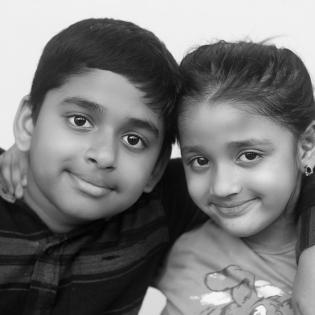
- identify behaviors of kindness and including others.
- use the cooperative group work skills of staying close to your partner, using your partner's name, and sharing the work.
- read aloud copy of The Brand New Kid by Katie Couric
- paper, crayons
- paper for book covers
- supplies for binding the pages of the book (stapler, hole-punch and yarn, etc.)
- Couric, Katie. The Brand New Kid. Illustrated by Marjorie Priceman. Doubleday, 2000. ISBN: 0385500300
Instructions
Anticipatory Set:
Describe a group you (as facilitator) belong in and feel cared for and trusted (and trust the others). For example, "I'm in a book group of friends. We feel like we belong together and enjoy our time together. We can share ideas without worrying that someone may criticize our thinking."
Discuss with the children what it feels like to belong. How do they know they belong? What does it mean to trust others and feel trusted in a group? Tell them they have the power to be kind and be someone that others can trust.
Read aloud the picture book, The Brand New Kid, by Katie Couric. Reading this book gives you the opportunity to discuss the best way to act when your child is either “the new kid” or watching the new kid. This book provides a great discussion starter on what it feels like to belong and how we can show kindness to others. This literature guide provides some discussion questions.
Discuss ways you can help a new child in the neighborhood or school feel comfortable and accepted. Make a list of kind things anyone can do to help create friendship and belonging.
Discuss why it is important for someone who has been here to welcome the new kid or family to the block rather than waiting until the new kid comes to you.
To encourage people to be friends with others, the children make and donate a book that describes behaviors in a community in which people demonstrate kindness and belonging.
Each child illustrates and labels one page that shows a behavior of trust, belonging, friendship, or kindness.
The children work in cooperative groups, sharing supplies and discussing their ideas. Identify the social skills you want them to practice, such as taking turns, listening, sitting close together, using a quiet voice, sharing materials, doing what you say you'll do, and complimenting one another.
Compile the pages and work collaboratively to bind the book with a cover and front pages.
Arrange to have children introduce and read aloud the book with another group. The book may be gifted to another group's library, if appropriate.
Read about the service-learning project called Love...Pass It On! by Indiana students who were taught using this Smiles Change the World unit of lessons to guide student learning and action.
Ms. Nolting is a 2nd grade teacher from Worthington, Indiana. "Students learn by example and firsthand experience," she said. "Service learning incorporates both of these techniques in a loving and fun way."
Philanthropy Framework
-
Strand PHIL.III Philanthropy and the Individual
-
Standard PI 01. Reasons for Individual Philanthropy
-
Benchmark E.1 Describe one reason why a person might give or volunteer.
-
-