Learning to Give, Philanthropy education resources that teach giving and civic engagement

generationOn

Find Lesson Plans Browse Resources
Jane Addams—Philanthropist in Action
Lesson 1:
printEmail this Lesson
Lesson
Handouts
Academic Standards
Philanthropy Framework

Purpose:

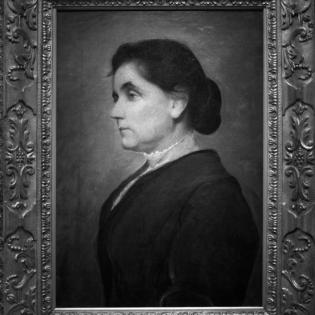
Jane Addams is used as a model to demonstrate a philanthropist in action, improving many situations, not only in the city of Chicago, but also at state, national and international levels.
Duration:

Two Forty-Five Minute Class Periods

Objectives:

The learner will:

  • compare and contrast nineteenth and twentieth century examples of enhancing the common good and analyze why Jane Addams was a model of responsible citizenship and civic virtue.
  • categorize various types of volunteer efforts and formulate ways to serve the common good.

Service Experience:

Although this lesson contains a service project example, decisions about service plans and implementation should be made by students, as age appropriate.

Reinforces Academic Service-Learning and prepares the way for participation in community projects.

Materials:

  • A Nation of Volunteers-The 1990s               Attachment One
  • Jane Addams (1860-1935)                           Attachment Two
  • Jane Addams at Hull House                          Attachment Three
  • Hull House Services                                       Attachment Four
  • Jane Addams and the Pullman Strike          Attachment Five
Handout 1
A Nation Of Volunteers-The 1990s
Handout 2
Jane Addams (1860-1935)
Handout 3
Jane Addams at Hull House
Handout 4
Hull House Services
Handout 5
Jane Addams and the Pullman Strike

Instructional Procedure(s):

    Anticipatory Set:
    Write one or both of the following quotations on the board. Ask students to explain them.

  • "Tis not to taste sweet things, but to do noble and true things that the poorest son of Adam dimly longs." - Carlyle
  • "Deeds make habits, habits make character, character makes destiny!" - Notes from Jane Addams' college journal
  • Once students have reflected on the meaning of the opening statement(s), ask them to now think about how that information might apply to volunteer work. Ask students if any of them are already engaged in volunteerism. What are examples of the types of thing students their age are doing voluntarily? What volunteer activities would they like to participate in or create?
  • Break the class into groups of four to five students. Distribute a copy of A Nation of Volunteers-The 1990s (see Attachment One) to each group. Ask student groups to brainstorm existing volunteer groups using the handout as a guide. Once sufficient time has passed to create extensive lists, discuss students' answers in a whole group setting and expand or clarify what various volunteer groups do.
  • Ask students to determine the general purpose of volunteer groups. (Responsible citizens address social problems by participating constructively in their communities.) Are most of the groups listed working toward community improvement? Reform? Of those purposes, which area most interests the students personally?
  • Ask students what they already know about industrialization, immigration and urban growth during the late 1800s. In particular, what problems did people in urban settings face (overcrowding, unhealthy working conditions, adjusting to life in cities)?
  • Use the following quotation to explain that, more than today, a large area of civic virtue lay outside the boundaries of government.
    "Large numbers of the unemployed received no assistance. Welfare as we know it did not exist; neither did unemployment insurance, housing assistance, medical care, food stamps, or social security. Local governments did not themselves construct bridges, parks or museums. …Yet the needy were helped, civic amenities were erected and the children of indigent workers had a chance at education. Side by side with government operated a congeries of organizations whose aims though quite disparate, were to influence the quality of social, civic and public life in America." (http://www.philanthropy.org/publications/curriculum_guides/09.html#toc)
  • Inform the class that Jane Addams was one person who exemplified the American tradition of civic responsibility and philanthropy. The daughter of a prosperous small town businessman, she traveled to Europe after her education. After attending a bloody bullfight in Spain, she decided she had something better to do with her life.
  • Divide the class into small groups of three or four students. Give each group one of the versions of the Jane Addams Handouts (Attachments Two, Three, Four and Five). Give the groups 10-15 minutes to read their handout and discuss the provided question(s). Discuss the answers from all the handouts as a whole group activity.
  • Compile a master list of all the activities that Jane Addams accomplished. Looking at how busy Jane Addams was in support of many causes, how do you think she would have preferred to be remembered?

Assessment:

Using the Categories of Volunteer Groups (see Attachment One), ask students to list the kinds of services that Jane Addams and Hull House provided next to the appropriate heading. As an example, next to the category of Health Care, the example "delivering babies" could be listed.

Bibliographical References:

  • Addams, Jane. Twenty Years at Hull-House. New York: MacMillan, 1910.
  • Bahmueller, Charles F., ed., Civitas: A Framework for Civic Education. (Calabasas, CA: National Council for the Social Studies Bulletin, 1991), 86.
  • Ellis, Susan J., and Katherine H. Noyes. By the People: A History of Americans as Volunteers. San Francisco: Jossey-Bass Publishers, 1990.
  • Felder, Deborah G. The 100 Most Influential Women of All Time: A Ranking Past and Present. New York: Citadel, 1996.
  • Kerber, Linda K., and Jane Sherron De Hart. Women's America: Refocusing the Past, 3rd ed. New York: Oxford University Press, 1991.
  • Marlow, Joan. The Great Women. New York: Galahad Books, 1979.
  • Munro, Petra. "Educators as Activists: Five Women from Chicago," Social Education, 59 (5), 274-278.
  • "Philanthropy in American History: The Elite Experience, 1980-1940." http://www.philanthropy.org/publications/curriculum_guides/09.html#toc
  • Weinberg, Arthur, and Lila Weinberg. Some Dissenting Voices: The Story of Six American Dissenters. New York: The World Publishing Company, 1970

Lesson Developed By:

Cythia Miles
Mt. Pleasant Public Schools
Mt. Pleasant High School
Mt. Pleasant, MI 48858

Handouts:

Handout 1Print Handout 1

A Nation Of Volunteers-The 1990s

Directions: Using the following categories, see how many volunteer groups you can list.

Examples:
Agriculture and Food
4-H
The Military
U.S. Marines' Toys for Tots Christmas Collection

Categories of Volunteer Groups * Examples
Labor and Employment  
Agriculture and Food  
Business and Industry  
Communications  
Transportation  
Human Services  
Health Care  
Education  
Religion  
Recreation and Leisure  
Cultural Arts  
Environmental Quality  
Justice  
Public Safety  
The Military  
International Involvement  
Political and Social Action  

* Categories of volunteer groups: (Ellis and Noyes, By the People, p. 315-338)


Handout 2Print Handout 2

Jane Addams (1860-1935)

"I recall an incident which must have occurred before I was seven years old, for the mill in which my father transacted his business that day was closed in 1867. The mill stood in the neighboring town, adjacent to its poorest quarter…On that day I had my first sight of the poverty which implies squalor…I remember launching at my father the pertinent inquiry why people lived in such horrid little houses so close together, and that after receiving his explanation, I declared with much firmness, when I grew up I should, of course, have a large house, but it would not be built among the other large houses, but right in the midst of horrid little houses like these.

… I gradually became convinced that it would be a good thing to rent a house in a part of the city where many primitive and actual needs are found, in which young women who had been given over too exclusively to study might restore a balance of activity along traditional lines and learn of life from life itself; where they might try out some of the things they had been taught and put truth to 'the ultimate test of the conduct it dictates or inspires.'" - Jane Addams, Twenty Years at Hull House

Questions for Group Activity

1. Why did this experience have such a profound affect on Jane but not her father?


2. What do you think Jane meant in saying "learn of life from life itself"?


3. Make a list of the "primitive and actual needs" Jane may have witnessed in the city.
Indicate whether those needs are valid or not valid today.

Handout 3Print Handout 3

Jane Addams at Hull House

The first organized activity of the settlement was a kindergarten. For adults, there were weekly informal readings of George Eliot, Hawthorne, and other classic authors. The settlement's activities expanded to include classes in handicrafts, cooking, sewing, acting, and music. By 1893, Hull House was a center with some 40 clubs, a day-care program, a gymnasium, a playground, a dispensary, and a cooperative boarding house for working girls. Each week, some 2,000 Chicagoans entered its doors to take courses and socialize with their neighbors. Jane Addams and her colleagues regularly visited the neighboring tenements in search of elderly, handicapped, or lonely individuals, and arranged transportation for them to Hull House. (Marlow, The Great Women, p.174-175)

Jane Addams began to see that she would have to do more than set up Hull House. She would have to expand her energies to include neighborhood, city and state reform, improve the living conditions of tenement houses, reform garbage collection and sanitation...Jane Addams also coordinated activities that led to other reforms, investigation into sweatshop conditions, [help for] newly arrived immigrants, public welfare procedures, cultural activities such as community theaters. She coordinated all these activities, publicizing their results in lectures and magazine articles. She also campaigned for women's suffrage, for world peace and for individual rights. (Marlow, p. 175)

When the U.S. entered World War I in 1917, Jane Addams joined Hoover's Food Administration. For two years, she toured the country urging increased food production for the benefit of the victims of the war...After the war, Addams continued to work for international disarmament. She helped found and served as first president of the Women's International League for Peace and Freedom. In 1930, Jane Addams was co-recipient of the Nobel Peace Prize. (Marlow, p.173-177.)

Questions for Group Activity:

1. If you closed your eyes and pictured Chicago and Hull House in the days when Jane Addams was alive, what would the scene be like? Who would be in it? What would they be doing?


2. Why do you think Hull House didn't just take care of feeding the poor in its neighborhood? Why do you believe it took on so many activities?


3. Why do you think Jane Addams was concerned about food production, international disarmament, women's suffrage and world peace when she was already busy with activities at Hull House?

Handout 4Print Handout 4

Hull House Services

From the start, Hull House was prepared to perform a variety of services. Many hours were spent to get "support for deserted women, insurance for bewildered widows, damages for injured operators, furniture from the clutches of the installment store." There was the November evening a fifteen-year-old Italian bride came to the house seeking shelter. Her husband had beaten her every night for a week because she had lost her wedding ring. There was another night when Miss Addams and another Hull-House resident, Julia Lathrop-who was later active in the organization of the Cook County Juvenile Court-acted as midwives to deliver an illegitimate baby because the doctor was late in arriving, and none of the Irish matrons would "touch the likes of her." (Weinberg, Some Dissenting Voices: The Story of Six American Dissenters, p. 157)

Questions for Group Activity:

1. Look at the wide range of services that Hull House provided for the people in the neighborhood. Why was it necessary for Hull House to do the things it did?


2. In general, what was life like for the people who lived around Hull House?


3. Who provides those services to the people of Chicago now?


Handout 5Print Handout 5

Jane Addams and the Pullman Strike

Jane Addams, the practical idealist, acted—sometimes successfully, sometimes unsuccessfully — as an arbitrator in labor-management disputes. She was a member of the Citizens' Arbitration Committee named during the Pullman strike, an event which brought Eugene Victor Debs, Clarence Darrow, and Governor John Peter Altgeld of Illinois to national prominence. She knew George M. Pullman and the pride he felt in the model town he had built for his employees on the southern outskirts of Chicago, but she also knew Pullman, Illinois, as a town dominated, governed, and owned by George Pullman. The Citizens' Arbitration Committee failed in its efforts to arbitrate the issues between the Pullman Company and the American Railway Union during the strike. Even though Miss Addams was merely an appointed arbitrator in this strike, …she and Hull House were criticized, and both lost friends. But she insisted that the settlement's demands for social justice and social order committed it to an effort to understand and, as far as possible, to alleviate the pressures brought about by the industrial system. (Weinberg, Some Dissenting Voices: The Story of Six American Dissenters, p.159-160)

Questions for Group Activity:

1. Why do you think Jane Addams tried to end a strike when it just brought her criticism?


Philanthropy Framework:

Submit a Comment

Unit Contents:

Overview:Social Reformer—Jane Addams Summary

Lessons:

1.
Jane Addams—Philanthropist in Action
2.
Neighbors Helping Neighbors

All rights reserved. Permission is granted to freely use this information for nonprofit (noncommercial), educational purposes only. Copyright must be acknowledged on all copies.