Citizenship and Civic Virtue
As a group we define good citizenship, including the classic Roman concept of civic virtue (putting the common good above individual need).
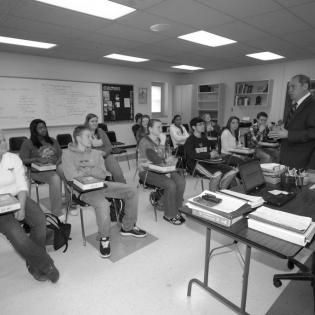
Describe a good citizen as a person of civic virtue.
Instructions
Anticipatory Set:
Recreate the Frayer Model handout on a board or large paper, and write the term "good citizen" in the center. Partners work for two or three minutes on their own copy of the chart to come up with a list of characteristics of good citizens. Ask partners to share with the whole group on the characteristics they identified. write them on the chart.
Provide this background: Ideas about citizenship have been debated and discussed for many centuries and many different cultures and societies have influenced these ideas. Some of the earliest ideas came from the Roman Republic where the leaders believed that all citizens must have civic virtue. They believed that citizens with civic virtue put the common good above their own individual needs. The participants add these terms to the examples part of the Frayer Model handout. They may add other examples.
Discuss the pros and cons of putting the common good before individual needs. Discuss ideas like civic virtue, responsibility, respect, common good, and community. Discuss and add non-examples to the chart.
Note: a vocabulary search may be completed as homework.
Discuss the words added. Work as a group to form a 1-2 sentence definition of good citizenship everyone can agree on. Write it on the chart.
Handouts

Philanthropy Framework
-
Strand PHIL.II Philanthropy and Civil Society
-
Standard PCS 01. Self, citizenship, and society
-
Benchmark HS.4 Describe and give examples of characteristics of someone who helps others.
-
-
Standard PCS 05. Philanthropy and Government
-
Benchmark HS.2 Discuss civic virtue and its role in democracy.
-
-