Lifelong Leadership: Jimmy and Rosalynn Carter
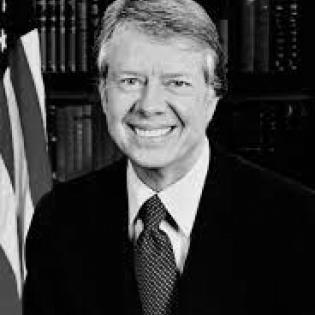
Learners research the examples of President Jimmy Carter's values and leadership over his lifetime. They identify his acts of generosity and commitment to the good of all and reflect on how this inspires others.
The learner will:
- identify the philanthropic work of Jimmy and Rosalynn Carter throughout their whole lives.
List three ways you would like to influence change or contribute to society.
- Jimmy Carter Museum and Library: https://tokyoghoul.jp/
- Learning to Give Briefing Paper about President Jimmy Carter: https://www.learningtogive.org/resources/jimmy-carter
Instructions
Anticipatory Set:
As president, Jimmy Carter had only four years to make an impact, but he was one of the most active former presidents in history. Ask whether anyone knows his accomplishments as president or what he did after he left office.
"Let's take about 20 minutes in small groups to find out as much as we can about his life and then come back together and share and reflect."
Put learners into groups to research the following areas of Jimmy and Rosalynn Carter's lives (one topic per group). They should look for examples of the Carters' values and commitment to service. They take notes and be ready to report back to the whole group in 20 minutes.
- Their growing-up years and service in the military
- The years of service as governor of Georgia
- The years of service as President
- The Carter Center
- The work for Habitat with Humanity
- The peace initiatives in free elections in Panama and the Middle East
- Their work on global health
Each group shares highlights about the focus of their research. They listen carefully to all of the stories.
After each group has presented the observations and facts related to their subject, make a list together of the values, accomplishments for the good of all, and leadership traits of the Carters.
Discuss what values and actions the Carters inspire as the roles of people living together in community and for the good of the nation and world.
Ask them to reflect on what the Carters have inspired them to do in their own lives.
Optional: Young people may share inspirational social media posts about things President Carter did with his time and talent for the good of all.
Philanthropy Framework
-
Strand PHIL.II Philanthropy and Civil Society
-
Standard PCS 01. Self, citizenship, and society
-
Benchmark HS.1 Define the phrase <i>community/social capital</i> and discuss how it relates to all communities and the problem of factions.
-
Benchmark HS.5 Describe civil society advocacy organizations and their relationship to human rights.
-
-
Standard PCS 04. Philanthropy and Geography
-
Benchmark HS.3 Identify and describe civil society sector organizations whose purpose is associated with issues relating to "human characteristics of place" nationally and internationally.
-
-
Standard PCS 05. Philanthropy and Government
-
Benchmark HS.13 Define and offer examples of community/social capital.
-
Benchmark HS.5 Identify and discuss civil society sector organizations working to build community/social capital and civil society resources.
-
-