The Beginning of the Storm
Using award-winning literature, the learners describe and analyze racism in Mississippi during the Great Depression. The readers identify the injustices in the community as well as the values and self-respect that build community relationships and strength.
The learners will:
- identify racism during Reconstruction and the Great Depression.
- define and give examples of community capital.
- evaluate how individuals and families speak up about injustice.
- YouTube versions of African-American gospel music from the 1930s
- handout for reference on the setting of the book: Historical Background
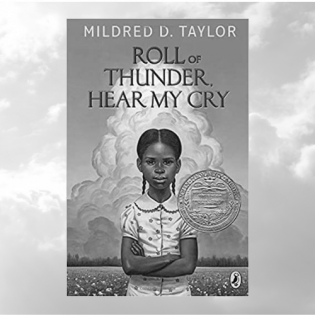
- reader copies of Roll of Thunder, Hear My Cry by Mildred Taylor
- Taylor, Mildred. Roll of Thunder, Hear My Cry. New York: Puffin Books, 1991.
- Various Artists. Testify! The Gospel Box. Rhino Records. June 15, 1999.You
Instructions
Anticipatory Set:
Play a sample of African American gospel music to set a tone of 1930s south. Talk about the time period of the Great Depression and Reconstruction. It was a time after slavery, but segregation and racism made life and job security much harder for African Americans. Discuss whether the music sings about hope, hardship, or community.
Provide a short background of the time frame of the book Roll of Thunder Hear My Cry from the handout below Historical Background.
The main character is 9-year-old Cassie whose family owns their land. The book is made up of several overlapping stories of the hardships of their family caused by racism. Several stories feature the humiliation of Black characters by powerful White characters. Cassie's family and Black community must weigh the costs of responding and standing up for themselves.
Distribute the novels. Ask the young people to read a chapter at a time in small groups or individually. Talk about the author's choice to write in the dialect of the 1930s southern Black and White families. What are the advantages and risks of writing that way?
Discussions:
Chapter One: What are examples of the Black children being treated inequitably? In what way do you see Cassie's family valuing self-respect and respect for others? What is civil disobedience and how is it related to Cassie standing up for what is right?
Chapters Two and Three: One form of racism involves police looking the other way when White men kill Black men. What excuses do they make up so it "seems okay"? What rules do the Logans have to avoid trouble?
Chapter Four: What is a code of honor? Is it okay to lie to protect someone else? Why does boycotting the Wallace store give the Logans some power?
Define community capital as building good relationships in a community by being trustworthy and treating one another well. What actions build good will, and what actions destroy good will, or community capital? How are the Logan family values important to building a strong community?
In the book Stamped by Kendi and Reynolds, Kendi argues a central lesson of race history is that racist ideas and beliefs result from oppression, not the other way around. Racist ideas do not lead to oppression, they result from it.
Handouts

Philanthropy Framework
-
Strand PHIL.I Definitions of Philanthropy
-
Standard DP 06. Role of Family in Philanthropy
-
Benchmark MS.1 Identify how families contribute to the socialization of children.
-
-
-
Strand PHIL.II Philanthropy and Civil Society
-
Standard PCS 01. Self, citizenship, and society
-
Benchmark MS.1 Define the phrase <i>community/social capital</i> and discuss how it relates to all communities.
-
-
Standard PCS 02. Diverse Cultures
-
Benchmark MS.5 Discuss examples of groups denied their rights in history.
-
-