Learning to Give, Philanthropy education resources that teach giving and civic engagement

generationOn

Find Lesson Plans Browse Resources
Let's Make Lemonade
Unit of 6 lessons
printEmail this Unit Overview

Unit Overview:

In this introductory unit of philanthropic education, students will learn about what a philanthropist is and design a service learning project to help meet a need in their community. Students will gain understanding through literature, media and personal experiences. The culminating activity will be a service-learning project. The students will create and run a lemonade stand to raise funds for a local non-profit organization. Language arts, social studies and math objectives will be incorporated throughout the unit.

Unit Purpose:

Students will understand the basic definition of philanthropy as the giving of time, talent and treasure for the common good. Students will also understand that everyone, regardless of age, can be a philanthropist. Students will understand that examples of philanthropy can be found in many areas.

The essential questions:

What is philanthropy?

Why do we have philanthropists?

Is every act done for another philanthropic?

Unit Objectives:

The learner will:

  • read and discuss philanthropy through literature.
  • define philanthropy through a musical performance.
  • participate in a collaborative service learning activity.
  • purchase products to meet a community need.

Service Experience:

Although lessons in this unit contain service project examples, decisions about service plans and implementation should be made by students, as age appropriate.

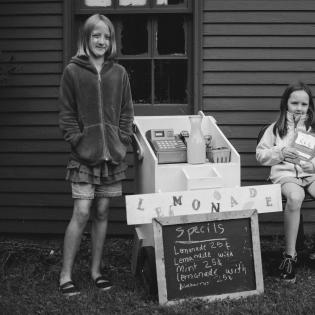
Students will design a lemonade stand and have the lemonade sale after Day One of Lesson Five: Get Ready, Get Set, Squeeze! Recurrent lemonade sales will take place as many times as needed to reach the determined goal. Lunch time or after school sales are excellent opportunities for students to learn about sharing their time. The final lesson includes a trip to a local food pantry. This will need to be set up at the beginning of this unit. Local pantries often work with food banks to help supply food for the pantry shelves. The money collected can be used to purchase food from a food bank to be delivered to the food pantry or it can be turned over to the pantry to purchase food. Many food pantries purchase truckloads of food to supply families with perishable items. The food pantry purchases produce by the pound at a discounted rate. In Michigan, where this unit was written, five hundred pounds of food costs approximately three hundred dollars and ten thousand pounds of food can be purchased for approximately four hundred dollars. Having the students earn money to purchase a truckload, and then witness the delivery of the food, has a lasting impact on students and demonstrates to them that they are able to make a big difference.

Unit Assessment:

The teacher will assess for mastery of objectives through observation, student work and reflection journals.

School/Home Connection:

Our class is learning about philanthropy through literature, media, current events and songs. We will learn that a philanthropist is someone who gives of his/her time, talents and treasures for the common good. Students will also be learning that they have the power to make a difference in the communities in which they live. Everyone can be a philanthropist. We all have something to give back to our communities. The students will be creating a special lemonade stand to raise money to be used to help our community.

Interactive Parent / Student Homework:

  • Attachment One: What Is A Philanthropist?, Lesson Two: Philanthropy in Song
  • Attachment One: Poster Example, Lesson Three: What’s the Big Idea
  • Attachment One: Lemonade Sale, Lesson Four: Who Will Help?

Notes for Teaching:

The service-learning component in this unit is designed to help provide food for local food pantries. This activity would also serve to meet the needs of the community in other areas. Students could choose to provide personal hygiene kits for clients of local shelters, provide toys or needed items for local women’s shelter, or for many other community needs.

State Curriculum and Philanthropy Theme Frameworks:

See individual lessons for benchmark detail.

Lessons Developed By:

Tracey Fritz
Mona Shores Public Schools
Churchill Elementary
961 Porter
Muskegon, MI 49441

Submit a Comment

All rights reserved. Permission is granted to freely use this information for nonprofit (noncommercial), educational purposes only. Copyright must be acknowledged on all copies.