Song Mapping
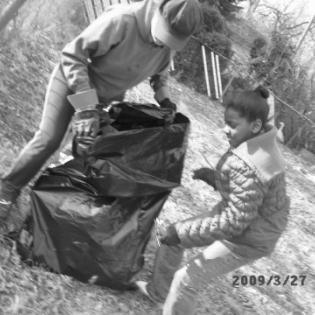
Motivated by the song "This Land is Your Land," learners locate areas on a U.S. map and discuss the definitions of community, philanthropy, and volunteer. They picture themselves as volunteers, helping others.
- define philanthropy as giving of time, talent, and treasures.
- locate, on a map of the United States, five of the places listed in the chorus of This Land is Your Land.
- describe how they could be a volunteer.
- recording of This Land is Your Land (see Bibliography)
- copy of the boook, This Land is Your Land (see Bibliography)
- full colorful map of the USA
- copy of an outline map of the United States for each (see Attachment One)
- Guthrie, Woody and Arlo Guthrie. This Land Is Your Land. Rounder Kids C8050. Rounder Records Corp., 1997.
- Guthrie, Woody and Kathy Jakobsen. This Land is Your Land. Boston: Little, Bear and Company, 1998.
Instructions
Anticipatory Set:
Show the last tri-fold page of the book This Land Is Your Land. Discuss what is happening in the different parts of the country. What are some things young people can do across the U.S.?
Recall the places Woody Guthrie named in his song. Look at a U.S. map and locate those places.
Using copies of the handout below, youth draw the five main areas from the song:
- California: Write the state's name along the western coast. Make associations with "California" (surfers, Disneyland, hot weather). They draw a picture of what they want to show as a symbol for California on the location of California on the map.
- New York Island: Write the words "New York" and draw a picture associated with New York City, such as skyscrapers, the Statue of Liberty, or bridges.
- Redwood Forest: Write words and draw trees in northern or central California.
- Gulf Stream Waters: Write word where the Gulf of Mexico is on the map and draw waves.
- Desert: Write the word and draw a cactus plant near Arizona or New Mexico.
Define community as a group of people living in the same area. Explain that the more people in the community work together, the better the community becomes. Ask them to give examples of people working together in a community. Discuss what is better.
Explain that a relief office was a place where people who didn't have work could get work or assistance with life needs. A relief office could be drawn and labeled anywhere on the map because every community has people who need and give help. Tell them that volunteers work at a relief office (a job center in today's world).
Define a volunteer as a person who does something without pay to help others because they choose to.
A volunteer practices philanthropy, which means giving of your time, talent, or treasure for the common good. Everyone can be a volunteer in any community. What can you give with your time, talent, or treasure to make the community better?
Ask the following for clarification of what anyone can give.
- What is your time? (Recess, after school, etc.)
- What is your talent? Can you do something well that you could share with others? (Play music, sing, rake leaves, read a story, etc.)
- What are your treasures? (Money or possessions. You do not have to give your treasures away to do philanthropy.)
They draw anywhere on the map pictures of themselves acting as volunteers, and write what they are doing to help others.
Handouts

Philanthropy Framework
-
Strand PHIL.I Definitions of Philanthropy
-
Standard DP 01. Define Philanthropy
-
Benchmark E.1 Define philanthropy as the giving and sharing of time, talent, or treasure intended for the common good.
-
-
Standard DP 02. Roles of Government, Business, and Philanthropy
-
Benchmark E.5 Recognize that volunteering requires freedom of choice.
-
-
-
Strand PHIL.II Philanthropy and Civil Society
-
Standard PCS 03. Philanthropy and Economics
-
Benchmark E.11 Describe the difference between volunteer and paid labor.
-
-
Standard PCS 05. Philanthropy and Government
-
Benchmark E.1 Define community as the degree that people come together for the common good.
-
-
Standard PCS 07. Skills of Civic Engagement
-
Benchmark E.2 Discuss an issue affecting the common good in the classroom or school and demonstrate respect and courtesy for differing opinions.
-
-
-
Strand PHIL.III Philanthropy and the Individual
-
Standard PI 01. Reasons for Individual Philanthropy
-
Benchmark E.1 Describe one reason why a person might give or volunteer.
-
-