Selfless - Selfish
We each have gifts we can use to give our lives purpose and make the world better. Using our gifts for the good of others can solve problems, if we take bold and selfless action. Even very young people are capable of the kind of selfless actions that create positive change.
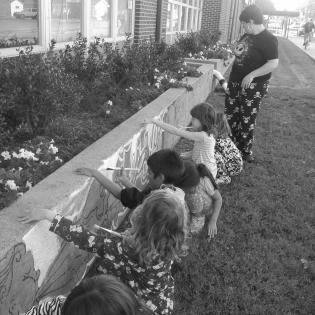
- give examples of acts of selflessness that improve the quality of life.
- read aloud copy of The Legend of the Bluebonnet by Tomie de Paola
De Paola, Tomie. The Legend of the Bluebonnet. New York: Scholastic, Inc., 1983.
Instructions
Anticipatory Set:
Write the words selfless and selfish on the board. Circle the suffix and prefix and point out the root word. "Self means me. I can act self - less or self - ish." Discuss the difference with examples.
Introduce The Legend of the Bluebonnet. Tell the children to listen for the words selfish and selfless in the story.
During the story, stop and check for understanding of the problem and what the spirits want. Discuss words drought and famine.
Discuss the following questions:
- Who was selfish in the story?
- In what ways could people be selfish to the earth? In what ways are we selfish to the earth today?
- What did She-Who-Is-Alone do that was selfless?
- How difficult do you think it was for her to give up her doll? Why did she do it?
- What was the benefit to all for her selfless gift?
- What does this tell us about personal behavior in the group wellbeing?
Discuss small selfless things we can do for the earth that create and improve rather than use up and destroy.
Discuss small selfless things we can do for one another that create and improve community rather than hurt others or cause fighting.
Each person can reflect on and name something they would like to do for the good of all or the earth (or both).
Choose a group activity that is a benefit to a group or the community. They could plant flower seeds and later plant the flowers to beautify an area. They could make cards or decorations for a nursing home. They could write notes of appreciation and thanks to community service people like firemen and policemen. The children give up their free time (selflessly) to do so.
Read about the service-learning project called Stocking Surprise by Mount Comfort Elementary students who were taught using this Selflessness unit to guide student learning and action.
Mrs. Stewart is an elementary teacher at Mount Comfort Elementary in Indiana. “Service and philanthropy are important to my students in order for them to better understand the world they live in today,” explained Stewart. “Many of them had not had the experience of volunteering or contributing to their community in a service way until this project was completed.”
Philanthropy Framework
-
Strand PHIL.III Philanthropy and the Individual
-
Standard PI 01. Reasons for Individual Philanthropy
-
Benchmark E.5 Give examples of actions students can take to improve the common good and list or describe responsibilities that go with those actions.
-
Benchmark E.9 Give examples how people give time, talent or treasure in different cultures.
-
-