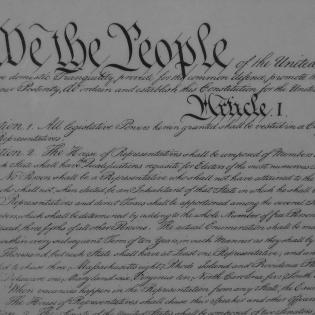
Learners look at primary documents of the Constitution and Declaration of Independence to gain a sense of the purpose, motivations, and people of the founding documents. Through viewing, reading, quotations, and discussion, students explore the meaning of democracy and responsible citizenship. Students explore the impact of service and volunteerism in our democratic history. They write a personal statement of responsible citizenship and create a group presentation about the importance of taking action for the common good as democratic citizens. The demonstration will include writing and technology to communicate personal statements of advocacy as it relates to their roles as citizens.
Focus Question: What is our democratic responsibility for volunteering and serving for the common good?
Eight 50-Minute Class Periods, plus time to create a group presentation
The learner will:
Learners create a presentation (audio, video, or other technology) that communicates a statement of advocacy for a specific issue or to promote personal responsibility in a democratic society to act for the common good. The students determine an appropriate audience and venue for their piece of advocacy in order to teach others about their responsibility as "We the people."
Observe learner participation in discussions and small groups to evaluate personal effort and comprehension of the concept of participatory democracy and effort.
In Lesson Three: My Civic Responsibility, use Attachment One: Rubric as a guide for assessing student work on the final presentation.
Learning to Give Briefing Papers (individual papers cited in lessons) http://learningtogive.org
The LEAGUE. Pathfinder Middle School Pledge video http://www.youtube.com/user/TheLEAGUEMichigan
icivics. Games to teach about the courts and the Constitution. http://www.icivics.org/
See individual lessons for benchmark detail.
Lessons Developed By:
Barbara Dillbeck
Director
Learning to Give
Betsy Flikkema
Associate Director
Learning to Give
All rights reserved. Permission is granted to freely use this information for nonprofit (noncommercial), educational purposes only. Copyright must be acknowledged on all copies.