Students use standard software as they develop, research, and present a project related to community nonprofits.
- Read more about Exploring Community Nonprofits
- Log in or register to post comments
Students use standard software as they develop, research, and present a project related to community nonprofits.
Definition
Carnegie Corporation was created to promote "the advancement and diffusion of knowledge and understanding." The Corporation works to carry on the vision of philanthropy as explained by...
Biographical Highlights
Dr. Hector Perez Garcia (1914-1996) was a passionate advocate for Hispanic-American rights in the United States. He was described by...
Michelle Parker
Definitions
The Environmental Protection Agency (EPA) defines environmental justice as “the fair treatment and meaningful involvement of all people regardless of race, color, national origin, or income,...
Definition
The Bill of Rights is the collective name of the first ten amendments to the United States Constitution. The Bill of Rights identified the...
Definition
Civil rights are defined as "the nonpolitical rights of a citizen; especially those guaranteed to U.S. citizens by the 13th and 14th...
Definition
Nonprofit organizations are organized for a public or mutual benefit other than generating profit for owners or investors (Salamon 1999). They can take a variety of forms from informal...
Philanthropy in American Indian and Alaskan Native cultures is not a new phenomenon—there is a long and rich history of indigenous giving traditions, and today there is a growing nonprofit sector devoted to social justice and development of Native communities in the United States. This paper examines overarching themes of Native American philanthropy (there are over 500 registered tribal nations in the continental US, and all celebrate their own giving and receiving rituals and traditions specific to their own communities), how the practice of Native American philanthropy has changed over time, and what the nonprofit sector within tribal communities looks like today. Additionally, this lesson will offer specific examples of youth-centric philanthropy and its focus on preserving Native culture for future generations.
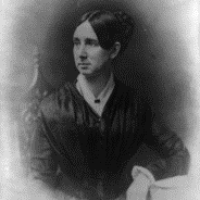
A social reformer dedicated to changing conditions for people who could not help themselves, Dorothea Dix was a champion for the mentally ill and the imprisoned. Through her tireless work of over two decades, Dix instituted changes in the treatment and care of the mentally ill and improved prison conditions.
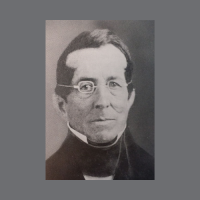
Thomas Hopkins Gallaudet was a trained minister whose future changed when he met Alice Cogswell, a young girl who was deaf. In 1817, Gallaudet opened the "Connecticut Asylum for the Education and Instruction of Deaf and Dumb Persons" in Hartford, Connecticut; it was the first U.S. deaf school. He had observed European educational methods and recruited a teacher of the deaf, Laurent Clerc, whose work helped develop American Sign Language (ASL).